In IT, we often hear the following sentence:
"We know about it, but we don't have the budget for it right now."
Or: "It will last a while longer."
And often it really does last a while.
Just like old brakes on a car, a burst pipe in the wall, or back pain that we ignore because "we can still function with it." The problem is that IT—just like health—doesn't announce the exact date of collapse in advance.
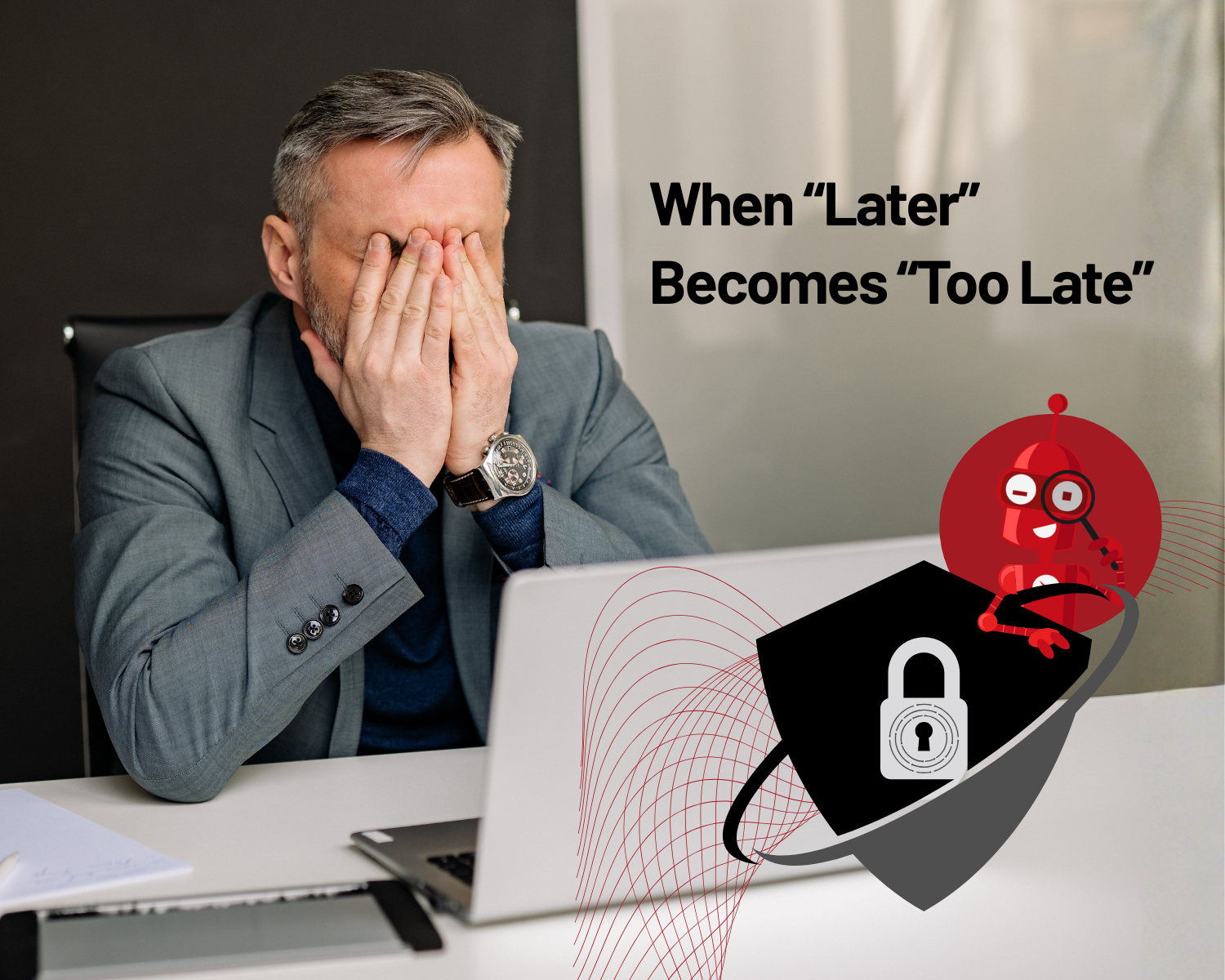
We recently dealt with a customer whom we had been warning about basic security risks for a long time.
They were using Windows 8, a system without security updates, and unsecured data storage that did not meet even the minimum security standards. We recommended replacement, migration, and backup. Nothing exotic. Nothing excessive. Just the basics.
The decision was always the same:
"Not yet. We have other priorities right now."
Then came the cryptovirus.
Not a sophisticated targeted attack. No movie scene. Just automated malware that found a weakness, encrypted the data, and left quietly.
The result?
The company almost closed.
Not for a day, not for a week—there was a real threat that there would be nothing left to continue with. Data gone. Orders at risk. Reputation in flames. At that moment, the question was no longer "how much will it cost," but "can anything still be saved."
Cybersecurity has one insidious feature:
as long as it works, it seems unnecessary.
Just like insurance, a fire extinguisher, or a seat belt.
It's like a house that has been leaking for years. First just a little. Then more. Eventually, the ceiling collapses. And suddenly we are no longer concerned with the color of the walls, but whether it is still possible to live there.
The most common reason for postponing security is money.
But the reality is harsh: the money that a company "saves" on security is often taken by someone else – an attacker, ransomware, or the consequences of an outage.
And what's worse, they often take something that can't be bought:
customer trust,
historical data,
business continuity.
When we, as an IT company, point out risks, we don't do it to scare people or sell services. We do it because we know what the situation looks like after an incident. We've seen companies that have recovered from it. And we've also seen those that never reopened.
Security is not about a perfect system.
It's about a responsible minimum that gives you a chance to survive even when something goes wrong.
It sounds paradoxical, but it's true.
As long as you're solving a lot of small problems, it means that the foundation is working. When security is lost, only one problem remains. And that is often existential.
Cybersecurity is not an extra expense.
It is the difference between upgrading your system and closing your business.
And that is a difference that is no longer worth postponing.
Contact us about a Cybersecurity scan.






Copyright © 2026 Všetky práva vyhradené