
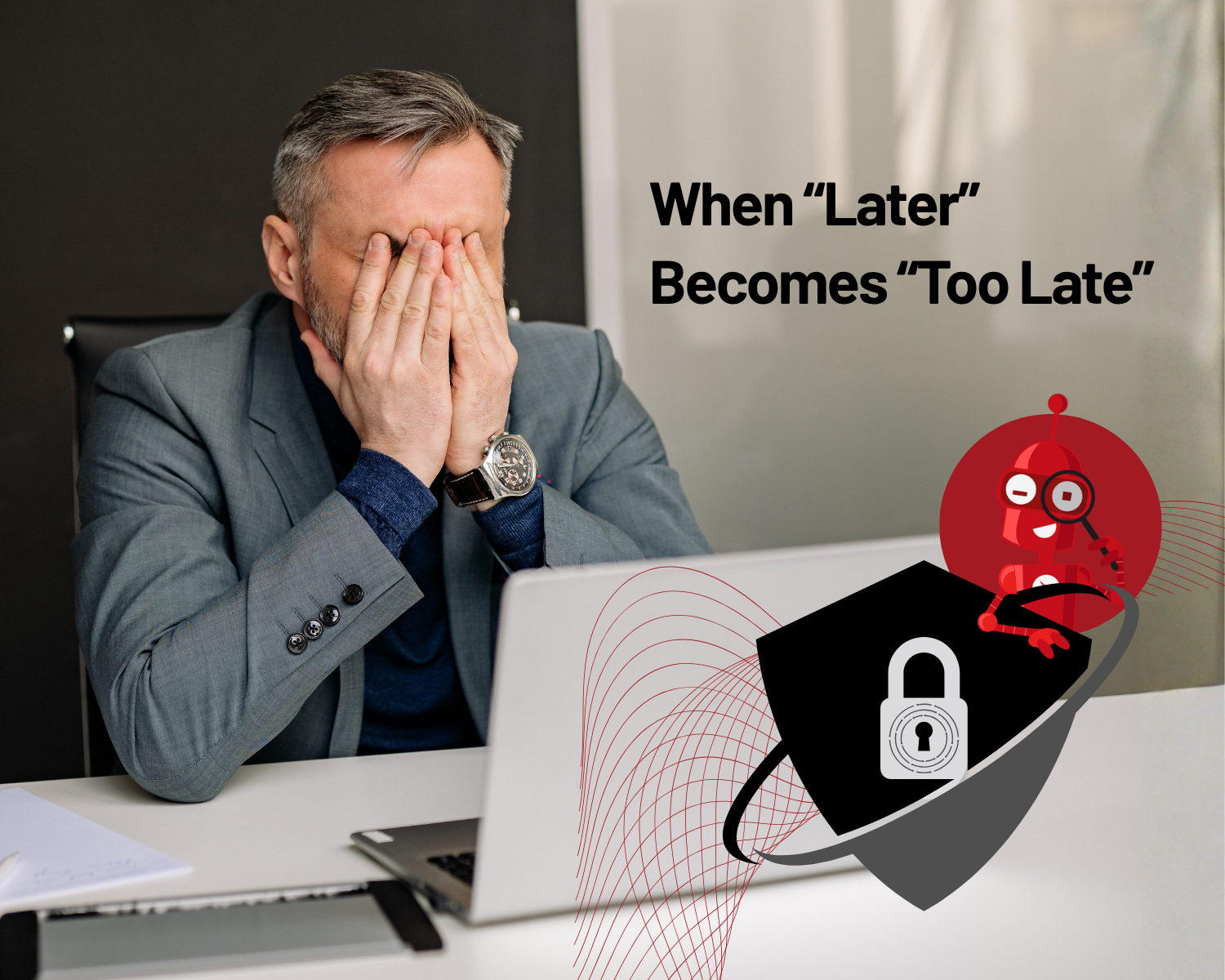
In IT we hear one sentence very often: "We know about that, but we have no budget for it right now." Or: "It will hold a while longer."
And it often does hold a while longer. Exactly like worn brakes on a car, a cracked pipe inside a wall, or the back pain you ignore because you can still get through the day. The problem is that IT, like health, does not announce the date of the collapse in advance.
A story from practice that should never have happened
We recently dealt with a customer we had been warning about basic security risks for a long time. They were running Windows 8 with no security updates and unprotected data storage. We recommended replacing it, migrating, backing up. The answer was always the same: "Not yet. There are other priorities right now."
Then the ransomware arrived. Not a sophisticated targeted attack, just automated malware that found the weak spot. The result? The company nearly closed. Data gone, orders at risk, reputation on fire.
Putting it off is the most expensive decision there is, and it looks like a saving
Cybersecurity has one treacherous quality: while it works, it looks unnecessary. While nothing happens, other problems get solved. When something does happen, only one problem is left.
The money you "save" goes to the attacker
Money is the most common reason for putting security off. The reality is harsh: the money a company "saves" on security often ends up with somebody else.
And that somebody often takes things you cannot buy back:
- your customers' trust
- years of data
- the continuity of the business
An IT firm as prophet of doom? No. More like a mechanic who can see a cracked brake disc
Pointing out risks is not about scaring anyone or selling services. It is because we have seen what the situation looks like after an incident. Security is not about a perfect system. It is about a responsible minimum that gives you a chance of surviving when something does go wrong.
In closing: while you have plenty of problems, things are going well
While you are dealing with plenty of small problems, the foundation is working. Lose your security and one problem is left. And that one usually threatens the business itself.
Cybersecurity is not an extra expense. It is the difference between discussing a system upgrade and discussing closing the company.
Need advice on your IT?
Get in touch and we will design something that fits your company.
Book a consultation