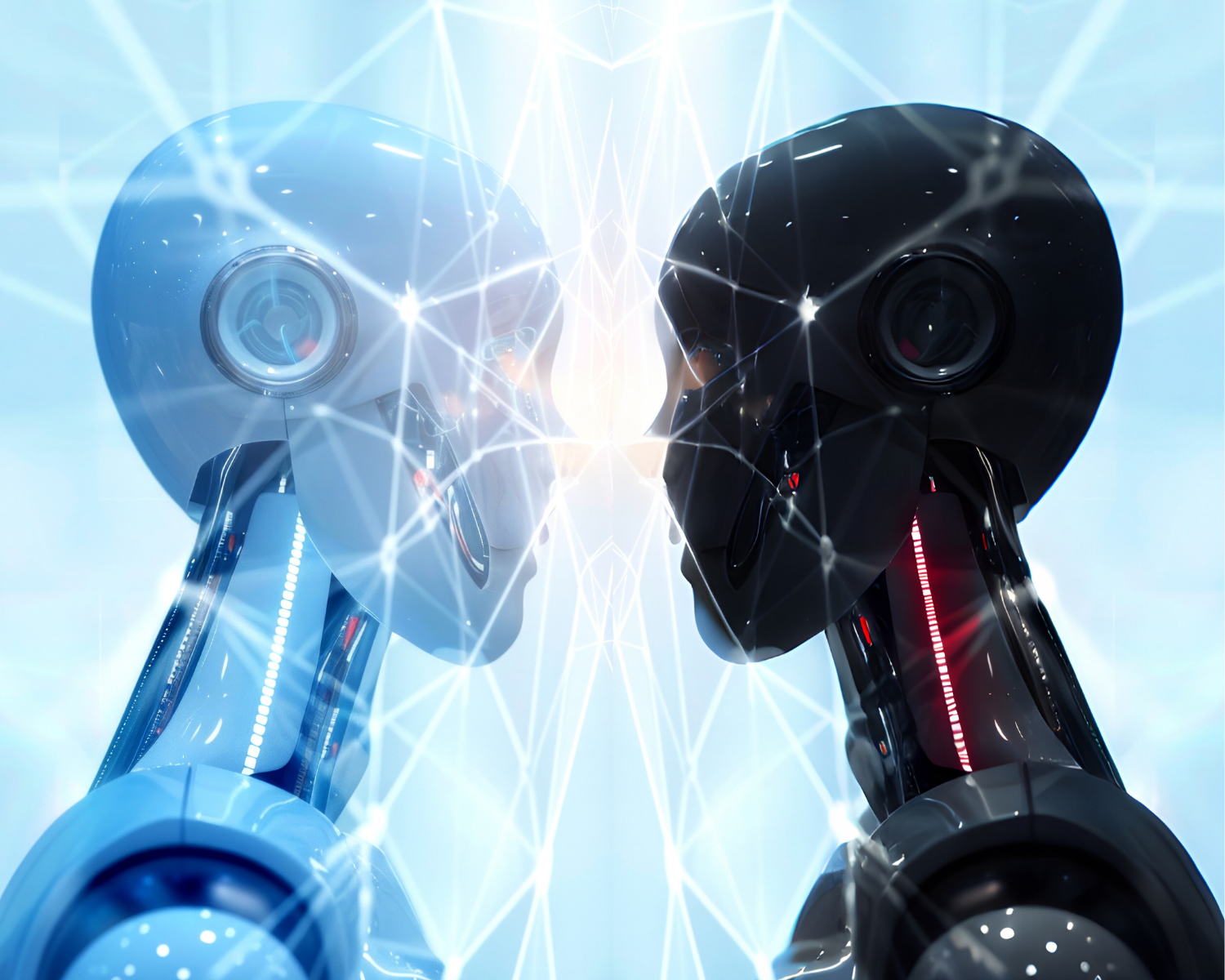
Artificial intelligence has become part of modern cybersecurity. But as usual, the technology has two sides. What helps companies protect themselves from threats today can be turned around by attackers, with even more precision, more speed and more damage.
Artificial intelligence has moved quickly into every industry and cybersecurity is no exception. AI-based products, automated security systems among them, can analyse enormous volumes of data quickly, which makes detecting and responding to threats far more effective. It also allows security processes to run automatically, freeing cybersecurity professionals to concentrate on other critical work.
While artificial intelligence strengthens an organisation's defences, attackers are using it more and more to launch sophisticated attacks, and that will continue through 2025. AI can imitate writing styles and generate realistic emails, for instance, which makes phishing campaigns considerably more convincing.
That has produced terms such as "dark AI", meaning artificial intelligence misused for harmful ends. Beyond the scenario above, AI's ability to generate variations of malicious software automatically is a serious challenge for antivirus products. AI also sharpens attacks by identifying data targets precisely and calculating the ransom a victim is most likely to pay.
AI on the side of good: faster protection, predictive security
Modern security products use AI for:
- detecting threats in real time
- predicting possible attacks from historical patterns
- automating responses without the IT team having to step in
- managing regulatory compliance through continuous audit of security policy
- adapting security strategy as threats change
AI therefore saves time, money and nerves, at a point when a minute decides a company's reputation.
AI on the attackers' side: a stunt double working for crime
The same technologies that protect companies are available to attackers, and they use them more skilfully than ever. What can "dark AI" do today?
- generate realistic phishing emails in the victim's own language, translation included
- get past antivirus automatically by generating variations of malware
- help pick a target and calculate the ransom the victim will pay
- imitate the voice of a boss or a finance director in Business Email Compromise
- use deepfake video and audio for social engineering
And that is only the beginning. Interestingly, artificial intelligence is probably the best answer to dark AI. Through 2025, cybersecurity backed by AI will improve considerably, with proactive AI predicting and heading off future threats by analysing patterns and past attacks to anticipate where the vulnerabilities are.
Organisations will increasingly use AI-driven governance frameworks to automate compliance checks and monitor cybersecurity policy in real time. That approach deals with how complicated cyber compliance has become in a digital world. AI systems will audit security practice continuously, keeping organisations compliant and reducing legal and financial risk. AI will also enable adaptive governance, updating policy as new threats and technology changes appear, which keeps cybersecurity both robust and compliant.
Artificial intelligence and blockchain will keep playing an important part in strengthening cybersecurity, by automating security systems, detecting threats, preventing data tampering and providing secure identity management.
How do you prepare for cyber attacks in the age of AI?
- Put multi-factor authentication (MFA) in place
- Avoid passwords where you can, and use passwordless sign-in
- Back up on the 3-2-1 model: three copies, two media, one offline
- Use EDR/XDR systems with AI threat detection
- Put AI to work on the security side, not only as protection but to anticipate risk
- Train your people. A person is the most common weak point in any system.
AI versus AI: a war the prepared side wins
Yes, artificial intelligence is a weapon. And as with any weapon, whose hands it is in decides everything. Companies that use it well gain an advantage. Companies that sleep through it become easy prey. By taking proactive measures, updating security frameworks regularly and keeping an eye on new technology, we can all help build a safer digital future. Every step you take today to strengthen your cybersecurity will pay for itself when tomorrow's problems arrive.
Need advice on your IT?
Get in touch and we will design something that fits your company.
Book a consultation